Newark, OH
Roofing in Newark, Done to Code and Ready for the Inspector
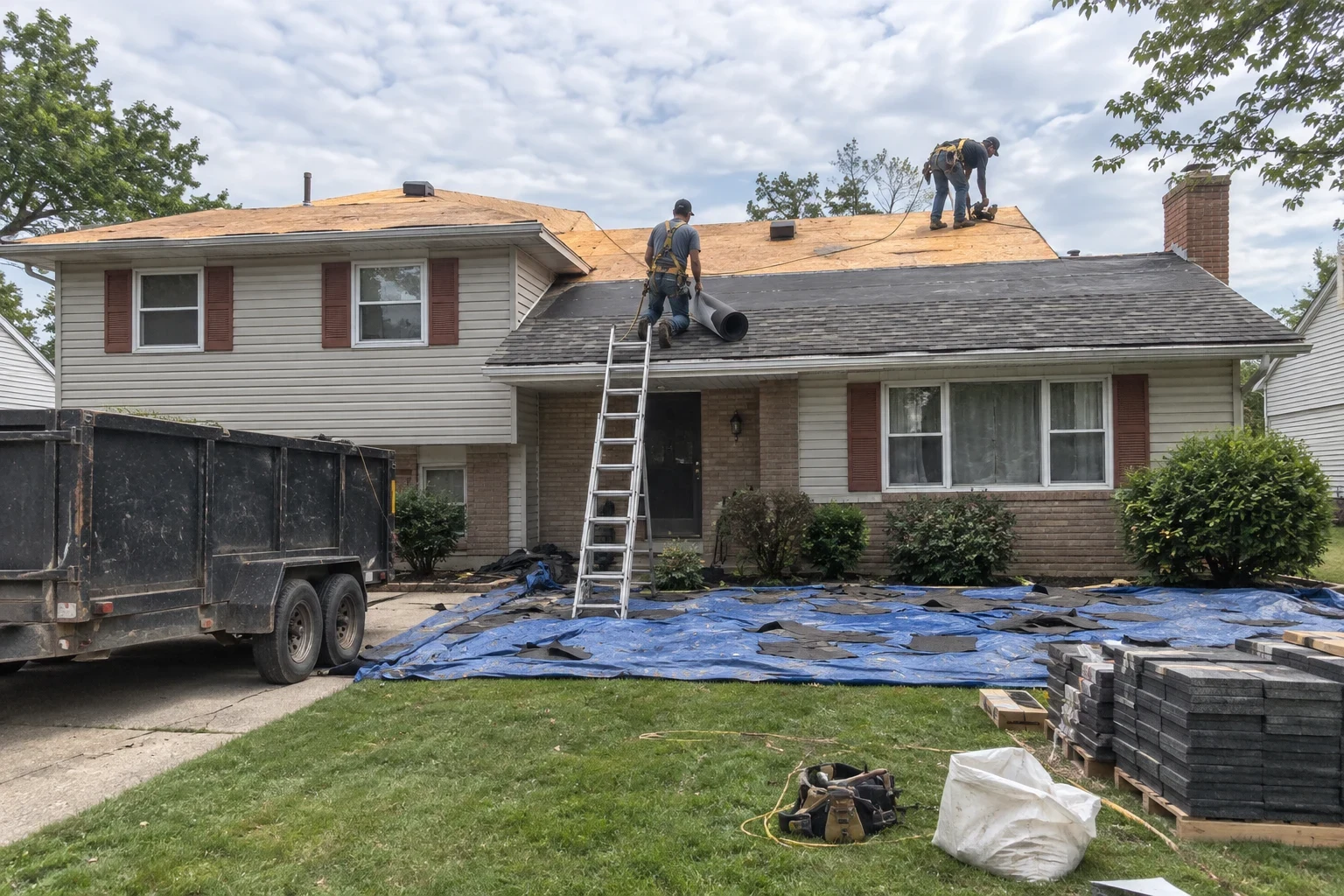
We replace and repair roofs, inspect them, hang gutters and fix soffit and fascia for homeowners in Newark, Heath and Granville. We pull the permit when the job needs one, build to the code, and tell you in plain words what each requirement means for your home.
- Insured and bonded
- Lifetime material warranties
- 10-year workmanship warranty
- Code items listed in writing
Towns We Cover
Our crews roof homes in Newark and nearby towns such as Heath, Granville, Buckeye Lake, Beechwood Trails, Pataskala and Johnstown. Permit offices and roofing rules differ from place to place, so we confirm what your address needs before work begins.
- Newark
- Heath
- Granville
- Buckeye Lake
- Beechwood Trails
- Pataskala
- Johnstown
Not sure your street is in our range? Ask us on the phone. Each town is covered in more detail on the Service Areas page.
Roofing Work We Do
We stick to the roof and the edges around it. That means roof replacement, roof repair and roof inspections, plus gutters and soffit and fascia, since water problems at the eaves usually start or end there. Each service page explains what the work involves and what drives the cost.
Roof Replacement
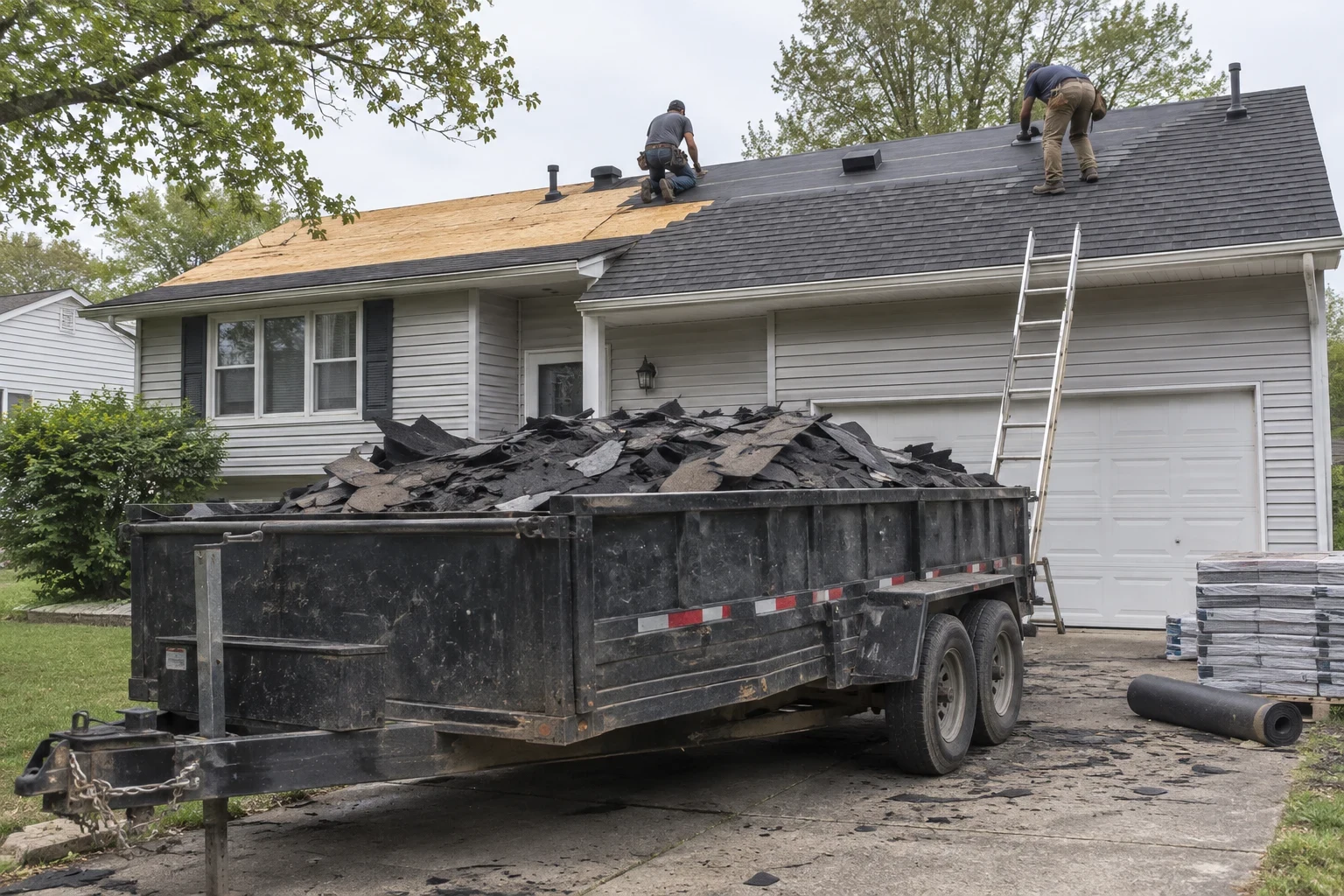
A full tear-off and new roof, with the deck checked and every code item in place before the inspector arrives.
Roof Repair
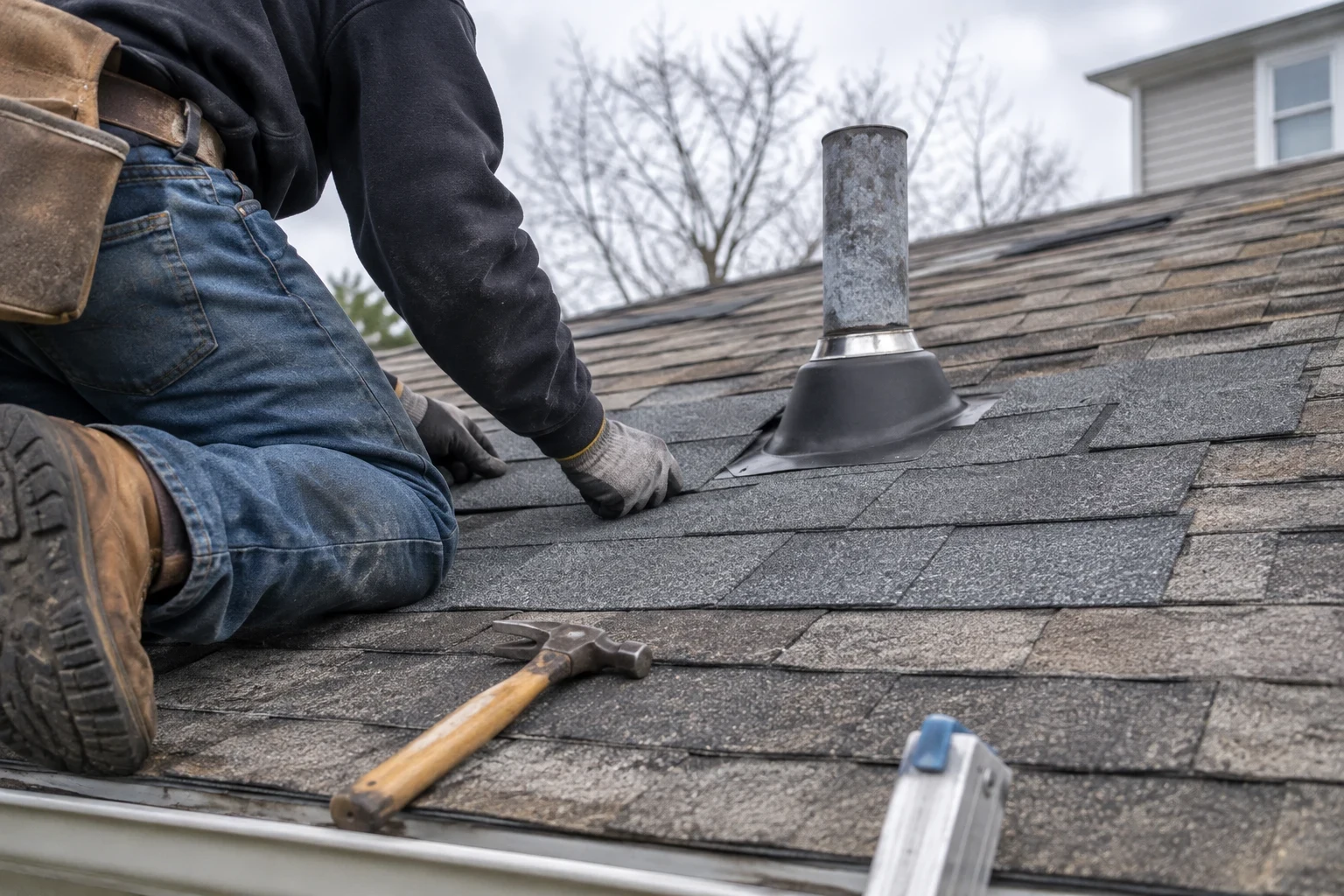
Leaks, lifted shingles, failed flashing and soft spots fixed the right way, with a plain answer on whether a repair is enough.
Roof Inspections
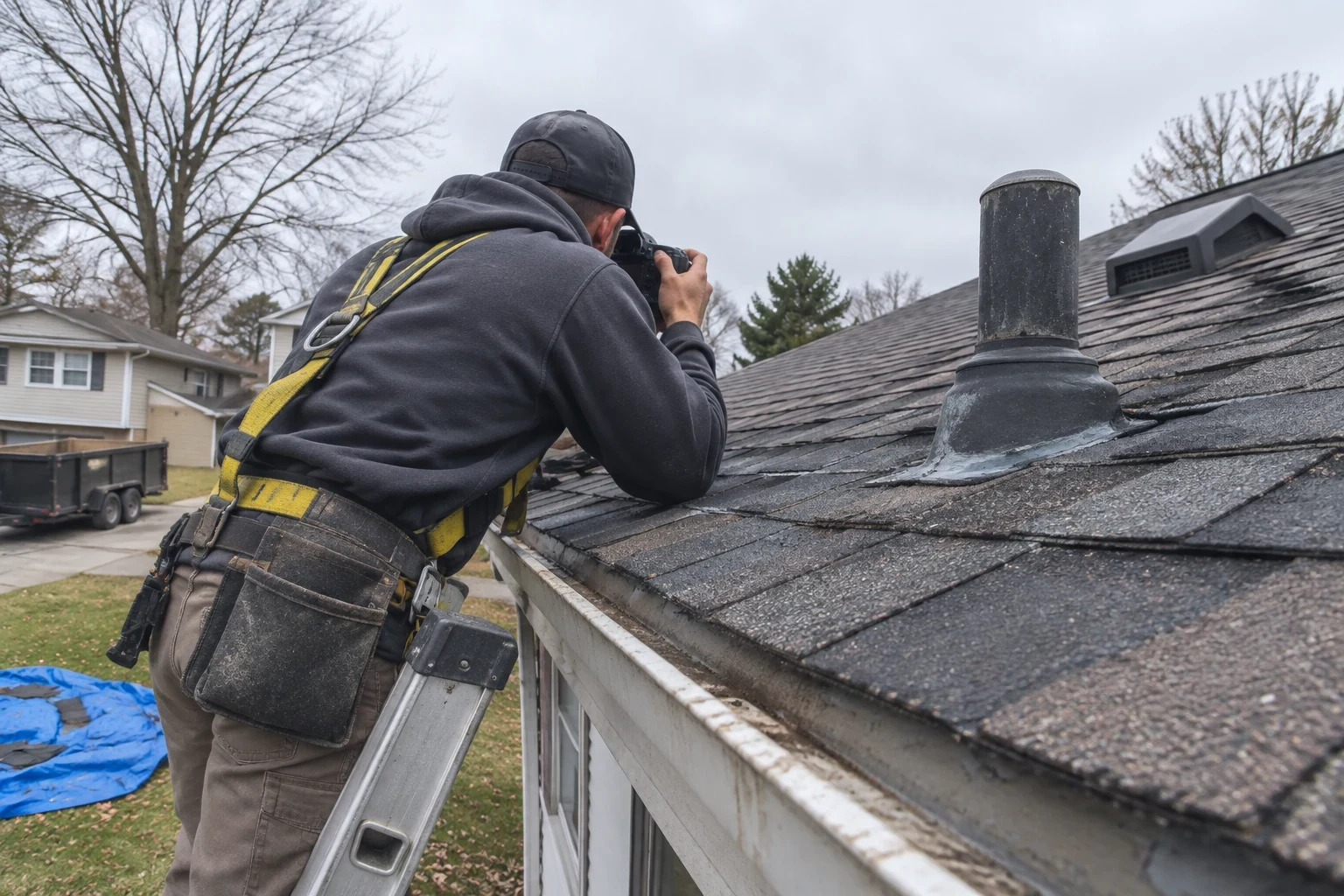
A close look at your shingles, flashing, vents and attic, with photos and a straight answer on what needs fixing now, later or not at all.
Gutters
One-piece aluminum gutters and downspouts sized to your roof, pitched to drain and fastened into solid wood so they hold up through Ohio winters.
Soffit and Fascia
We replace rotted fascia boards and worn soffit panels, then make sure your attic gets the intake air the code calls for.
Why Homeowners Call Us
Most roof trouble we see traces back to a step someone skipped. We do the steps and show you we did them.
We handle the paperwork
If your job needs a permit, we apply for it and set up the inspection. You don't have to make trips to the building department or sort out which rules apply. If a question comes up along the way, you call us and we explain it.
Code items explained before work starts
Your estimate lists what the code asks for on your roof, like ice barrier at the eaves, drip edge and attic venting. We tell you why each one is there. Nothing gets added halfway through as a surprise.
Repair when repair will hold
A roof with a few bad shingles or one tired pipe boot doesn't need replacing. We tell you which it is and why. If a repair won't last, we say that too.
Photos of what we find
We take pictures of the problem spots, the decking after tear-off and the finished details. You see what we saw, even the parts that get covered up.
Your yard left clean
Before tear-off we cover plants and lay tarps along the house. At the end of each work day, the crew sweeps the lawn, beds and driveway with a magnet bar so no loose nails get left behind for tires or bare feet.
What Drives the Price of a Roof
Each roof gets priced on the work it actually needs. Two houses the same size can end up with very different totals, and here is why.
We look at the roof in person, then go over a written estimate with you line by line. The price you agree to is the one we work from, and hidden items such as bad decking have a per-unit price in writing before work starts.
- Roof area and pitch
- More roof means more shingles and more labor. Steep slopes keep the crew tied off and moving slower, so labor goes up.
- Layers to strip
- The code limits how many layers of shingles a roof may carry. If two are already there, both come off, adding tear-off time and dump fees.
- Decking under the old roof
- Nobody sees the decking until tear-off. Soft or rotted boards are replaced before new shingles go on, and your estimate shows a price per sheet so you know that cost ahead of time.
- Meeting code
- Plenty of older roofs lack ice barrier at the eaves, drip edge or enough attic venting. Putting them in is part of doing the job right, and each shows as its own line.
- Roof edge work
- Rotted fascia and poorly pitched gutters are simplest to fix while the roof is open. You decide whether to do it now or later.
- Your shingle choice
- Shingle lines differ in cost and in wind rating. We walk you through the ones that fit your roof.
How a Roof Job Goes
From your first call to the last sign-off, this is the order things happen in.
- 1
You call us
Tell us what you have noticed, such as a ceiling stain or shingles on the lawn. We ask a few questions about the house and set a day to come see it.
- 2
We look in person
We get up on the roof, check the attic when we can reach it and take photos of anything important. Then we come down and talk through each finding with you.
- 3
Estimate on paper
The scope and price come to you in writing, code items included. There is no rush to decide.
- 4
The work
Once approvals are in, we cover the yard, strip the old roof, repair the decking, then lay ice barrier, underlayment, flashing and shingles. Size and weather decide whether it takes one, two or three days.
- 5
Inspection and cleanup
If the job needs an inspection, we are there for it. We pick up stray nails and go over the finished roof with you.
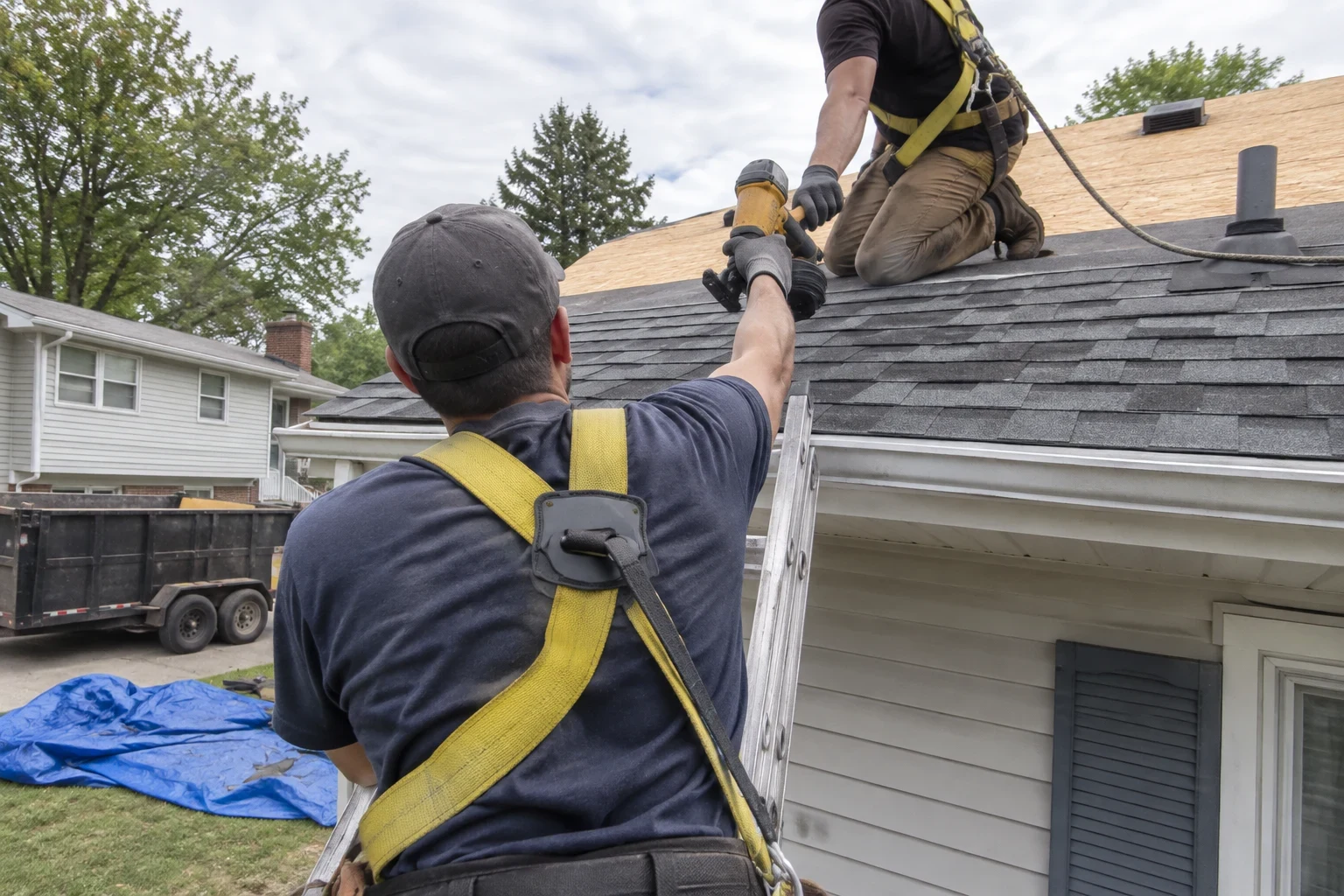
About Newark Roofing
We are a roofing company that works on houses around Newark. Our work is roofs, gutters, soffit and fascia. We do not branch out into other trades, so that's where all our attention goes.
We care about the parts of a roof nobody sees once it's done. Ohio winters bring freeze-thaw cycles and ice that backs up under shingles at the eaves. That is why the ice barrier, the drip edge and the attic venting matter, and why the code spells them out. We build them right, and we explain them to you plainly so you know what you paid for.
- Insurance
- Insured and bonded
- Warranty
- Lifetime material warranties; 10-year workmanship warranty
Questions We Hear Most
Do I need a permit to replace my roof?
Often, yes, but it depends on where you live and the scope of the work. A full tear-off usually needs one, and a small repair often does not. We check with the local building department for your address and handle the paperwork ourselves when it's required.
Can you put new shingles over my old ones?
Sometimes, if there is only one layer and the decking is sound. The code limits how many layers a roof can carry. In most cases we recommend a tear-off so we can see the decking and install the ice barrier properly at the eaves.
Can my roof be repaired, or does it need replacing?
It comes down to how old the shingles are, how many spots are failing and whether the decking feels solid when we walk it. Trouble confined to one area usually means a repair will do. Shingles worn thin across the whole roof mean a patch only buys a little time, and we'll say so.
What warranty comes with the roof?
The shingles and other roofing materials we install carry lifetime material warranties. We go over the paperwork with you when the job is done so you know what is covered.
What is ice barrier and why does the code require it?
It's a sticky waterproof membrane laid along the eaves under the shingles. In cold weather, snow melts and refreezes at the roof edge and pushes water back up under the shingles. The membrane keeps that water out of your walls and ceilings.
Should I do gutters and fascia at the same time as the roof?
If the fascia is soft or the gutters are pulling away, doing them together is usually smart. The drip edge and gutter line up with each other, and it's easier to get it right in one pass. If they are in good shape, we leave them alone.
Do you need to come inside my home?
Only if you want us to check the attic. Looking at the underside of the decking and the venting tells us a lot. The roofing work itself all happens outside.
Get Your Roof Looked At the Right Way
Tell us what's going on up there. We'll set a time to look, explain what we find and lay out what the code asks for on your roof.